
China has one of the world’s strictest approaches to gambling, with most forms banned under national law since 1949. In mainland China, all gambling activities are illegal except for two government-run lotteries: the Welfare Lottery and the Sports Lottery. If you operate or participate in unauthorized gambling, you face serious criminal penalties including fines and imprisonment.
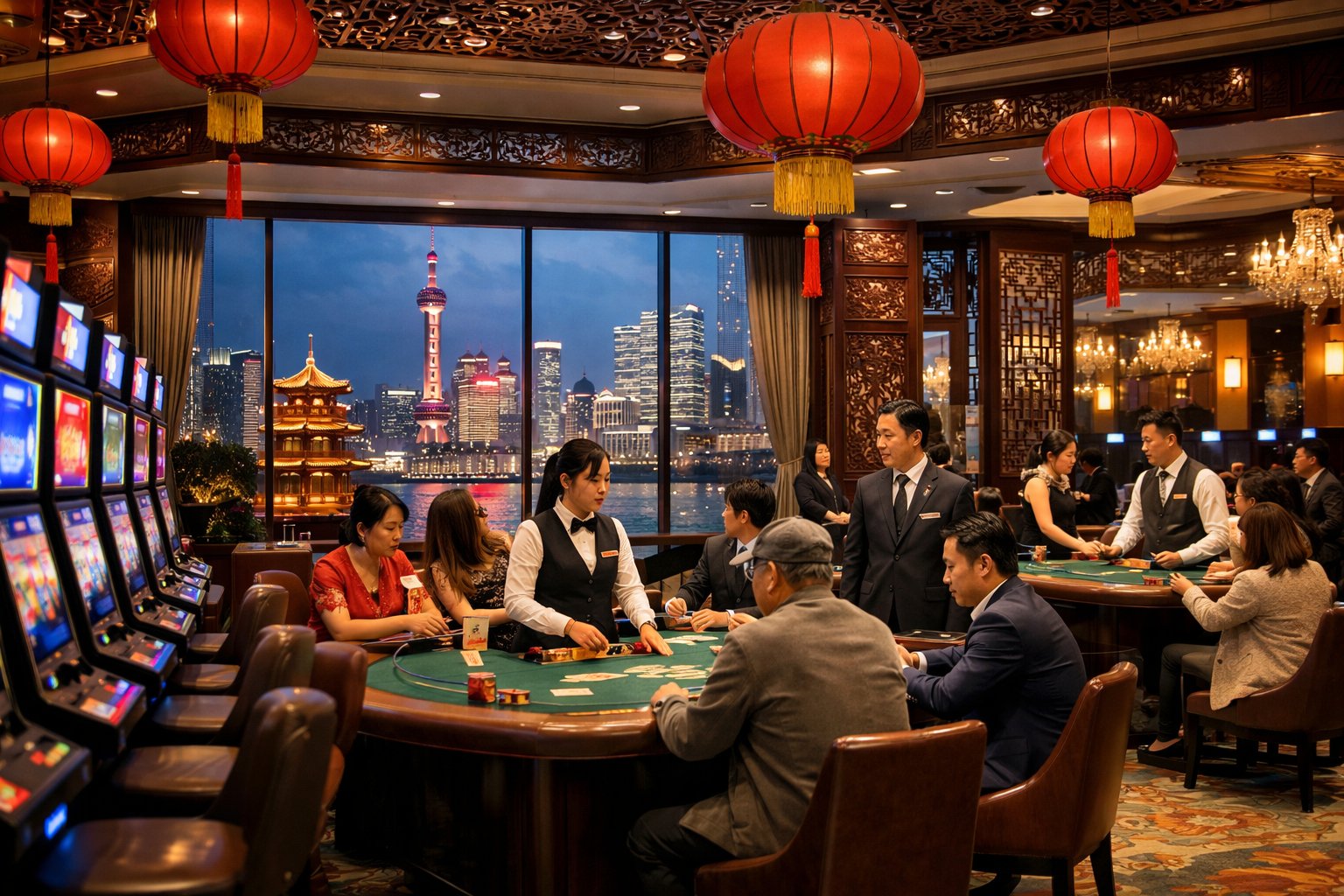
The situation becomes more complex when you look beyond the mainland. Macau operates as a legal gambling hub with dozens of casinos, while Hong Kong maintains its own regulated betting systems. Meanwhile, underground gambling continues to exist despite harsh enforcement, and millions of Chinese citizens travel abroad to gamble legally.
Understanding China’s gambling laws requires knowledge of the legal framework, cultural history, and regional differences across Chinese territories. This guide walks you through the current regulations, explains how the state lotteries work, explores Macau’s unique status, and examines the historical reasons behind China’s gambling prohibitions.
Legal Status of Gambling in Mainland China

Gambling in China operates under one of the world’s strictest prohibition frameworks. The People’s Republic of China bans nearly all forms of gambling except for two state-authorized lotteries, with severe criminal penalties for violations.
Prohibition of Land-Based and Online Casinos
All casinos are illegal in mainland China. You cannot legally operate or visit a casino anywhere within the People’s Republic of China outside of designated special administrative regions.
The ban extends to both physical gambling venues and digital platforms. Illegal online gambling is actively suppressed through website blocking, app store removals, and criminal prosecution. Chinese authorities monitor and shut down offshore gambling sites that target Chinese citizens.
Underground gambling operations face immediate closure. Law enforcement conducts regular raids on illegal gambling establishments, including private mahjong parlors and betting shops that operate for profit.
Criminal Law and Penalties
The Criminal Law of the People’s Republic of China explicitly criminalizes gambling activities. If you participate in gambling, you face fines and potential imprisonment depending on the severity of the offense.
Organizing or operating gambling establishments carries harsher penalties than participation. You can receive prison sentences ranging from three years to ten years or more if you run an illegal gambling operation. The law treats large-scale operations and repeat offenders with increased severity.
Online gambling violations receive the same treatment as land-based offenses. The Ministry of Public Security actively investigates both operators and participants in illegal online gambling activities.
Scope and Definition of Gambling Activities
Chinese law defines gambling broadly to include most games of chance played for money or valuable prizes. This encompasses card games, dice games, sports betting, and casino-style games when played for stakes.
State-authorized lotteries remain the only legal exception. The China Welfare Lottery and China Sports Lottery operate under government control and are not legally classified as gambling. These lotteries fund social welfare programs and sports development initiatives.
The prohibition covers gambling activities conducted by Chinese citizens both domestically and overseas. Participating in gambling while traveling abroad or using foreign gambling platforms from within China violates Chinese law.
State-Authorized Lotteries in China

China permits only two state-run lottery systems that generate billions in annual revenue for social welfare programs and sports development. The Welfare Lottery and Sports Lottery operate under strict government oversight and represent the sole legal gambling options available to Chinese citizens on the mainland.
Welfare Lottery: Purpose and Operation
The China Welfare Lottery launched in 1987 to raise funds for social welfare causes across the country. The Welfare Lottery Issuance and Administration Center manages all operations and ensures compliance with government regulations.
Revenue from the Welfare Lottery supports vulnerable populations including widows, homeless individuals, and people with disabilities. The funds also finance elderly care facilities, orphanages, and other charitable programs.
You can purchase Welfare Lottery tickets at authorized retail locations throughout China. The system operates with full government backing and provides transparent reporting on how lottery proceeds benefit social programs. This lottery remains one of the most trusted forms of legal gaming in mainland China.
Sports Lottery: Structure and Scope
The China Sports Lottery began operations to fund sports development and athletic programs nationwide. The Sports Lottery Administration Center oversees distribution, sales, and prize fulfillment for all sports lottery products.
This lottery system generates substantial revenue that supports Chinese athletic training facilities, sports infrastructure, and youth sports programs. The government channels these funds directly into building better sports venues and supporting competitive athletes.
Sports lottery tickets are available through licensed vendors across the country. The lottery includes both traditional number-drawing games and sports-themed betting options that comply with Chinese regulations. All operations must follow strict guidelines to prevent illegal gambling activities.
Popular Lottery Games
Double Color Ball stands as the most popular Welfare Lottery game in China. Players select numbers from two separate pools, creating multiple prize tiers based on matching combinations. Drawings occur multiple times per week with prizes ranging from small amounts to substantial jackpots.
The 3D Lottery offers another widely played option where you choose three-digit combinations. This game provides daily drawings and appeals to players seeking more frequent opportunities to win.
Both lotteries also offer scratch-off tickets and instant-win games at retail locations. These products provide immediate results and lower price points for casual players.
Lottery Regulations and Oversight
Chinese law treats state-sponsored lotteries differently from other gambling activities. The government does not classify these lotteries as gambling under national law, which allows them to operate legally while all other betting remains prohibited.
Regulators enforce strict penalties for unauthorized lottery operations. You face fines or imprisonment for participating in illegal lotteries or online gambling schemes that mimic official lottery products.
The government maintains tight control over lottery marketing, sales locations, and prize distribution. All lottery revenues undergo regular audits to verify proper allocation to designated social programs. Recent reforms in 2026 increased transparency requirements and strengthened oversight mechanisms to prevent corruption within the lottery system.
Gambling in Macau: The ‘Las Vegas of Asia’
Macau stands as the only place in China where casinos operate legally, generating over $30 billion annually and earning its nickname as the gambling capital of the world. The region’s legal framework, major casino operators, and unique gaming traditions have transformed it into a destination that surpasses Las Vegas in gambling revenue.
Legal Framework and Oversight
Gambling became legal in Macau in the 1850s under Portuguese rule. The activity remained legal after China took control in 1999, when Macau became a special administrative region with its own laws.
The Gaming Inspection and Coordination Bureau oversees all casino operations in your visits to Macau. In 2002, the government ended a 40-year monopoly and issued six casino licenses to different operators. This change opened the market to competition and attracted major international companies.
All 41 casinos in Macau operate under government franchise and follow a common set of rules. Gambling taxes provide 75% of the government’s revenue. These taxes fund the region’s welfare system and annual cash payments to residents.
The government implemented smoking bans in casinos starting in October 2014, expanding the restrictions to VIP rooms in 2019. You’ll find these regulations were driven by worker safety concerns despite casino industry opposition.
Major Casinos and Operators
Three main companies dominate the casino market: SJM Holdings, Galaxy Entertainment Group, and Las Vegas Sands. The Venetian Macao is the largest casino with 550,000 square feet of gaming space, 3,400 slot machines, and 800 gaming tables.
Wynn Macau operates 24 hours daily with 375 slot machines and 212 gaming tables across 246,000 square feet. The property includes 600 hotel rooms and multiple restaurants. Other major properties include MGM Macau with 345 gaming tables and Sands Macao featuring 270 gaming tables.
Twenty-four casinos are located on the Macau Peninsula, while 17 operate in Cotai. The junket trade system operates throughout these casinos, where agents recruit high rollers and advance them credit for gambling. This VIP system developed in the 1980s and remains a key part of Macau’s casino operations.
In 2025, Macau casinos earned MOP 247.4 billion ($30.9 billion), marking a 9.1% increase from 2024.
Popular Casino Games and Traditions
Baccarat dominates the gaming floors and generates the single largest source of public revenue in Macau. Chinese gamblers prefer table games, with only 5% of annual gaming revenue coming from slot machines.
You’ll find the punto banco version of baccarat most common, offering the best odds of any table game. VIP rooms feature baccarat exclusively. Players follow unique conventions including “squeezing” cards by folding sides and corners to slowly reveal their value, banging tables, and tracking wins on charts called the Big Road.
Other traditional games include fan-tan, pai gow, Sic bo, roulette, and blackjack. Poker arrived later, with the first live tournament held in November 2007. Texas hold ’em poker became officially regulated in 2008.
Casinos also offer keno, boule, and slot machines, though these attract far fewer players than baccarat tables. Your gaming experience in Macau will differ from Las Vegas, as the focus remains purely on gambling rather than entertainment or social activities.
Gambling in Hong Kong
Hong Kong maintains strict control over gambling activities, permitting only horse racing, football betting, and the Mark Six lottery through a single authorized operator. The Hong Kong Jockey Club holds exclusive rights to all legal gambling operations under government oversight.
Legal Status and Regulation
The Gambling Ordinance of 1977 serves as the primary law governing all gambling activities in Hong Kong. This legislation prohibits gambling unless specifically authorized by the government. Only three forms of betting are currently legal: horse racing, football betting, and the Mark Six lottery.
The Secretary for Home and Youth Affairs holds the authority to approve gambling activities and oversee related ordinances. The Betting Duty Ordinance regulates how the government collects taxes on authorized betting. You must be at least 18 years old to participate in any legal gambling activity.
All other forms of gambling remain illegal in Hong Kong. This includes casinos, slot machines, poker rooms, and unauthorized online betting platforms. The government maintains this restrictive approach to limit gambling’s social impact while generating revenue through controlled channels.
Role of the Hong Kong Jockey Club
The Hong Kong Jockey Club operates as the sole legal gambling provider in Hong Kong. Established in 1884, this organization holds exclusive licenses for all authorized betting activities. The HKJC runs horse racing tracks, off-course betting branches, and lottery operations throughout the territory.
The club pays substantial taxes on its operations. Horse racing faces a 72.5% tax rate on net stake receipts, while football betting is taxed at 50%. The Mark Six lottery carries a 25% tax rate on total turnover. These high tax rates generate significant revenue for the Hong Kong government.
The HKJC must follow strict responsible gambling requirements. This includes age verification at all betting locations, self-exclusion programs for problem gamblers, and mandatory responsible gambling messages in advertising. The organization also funds charitable and community programs through its lottery proceeds.
Popular Betting and Lottery Options
Horse racing remains the most popular form of legal gambling in Hong Kong. The HKJC operates two racecourses where you can place bets on local and international races. Off-course betting branches throughout the city provide convenient access to wagering.
Football betting became legal in 2003 and covers international matches and major leagues. You cannot bet on Hong Kong teams or games played locally. The HKJC offers various bet types on football matches through its branches and authorized online platform.
The Mark Six lottery draws twice weekly and offers jackpot prizes that can reach substantial amounts. You select six numbers from 1 to 49, and prizes depend on how many numbers you match. This lottery remains popular among Hong Kong residents as an affordable gambling option.
Forms of Illegal and Underground Gambling
Despite strict national prohibitions, illegal gambling operations persist across China through online platforms, underground casinos, and unlicensed lotteries. Chinese authorities face ongoing challenges combating these activities, which range from proxy betting services to organized crime-run gaming halls.
Online Gambling and Proxy Betting
Illegal online gambling represents the largest segment of unauthorized gaming in China. Chinese citizens access offshore gambling websites through VPNs and proxy services, bypassing government blocks on foreign betting platforms.
Proxy betting involves intermediaries who place bets on behalf of Chinese players on overseas gambling sites. These agents operate through encrypted messaging apps like WeChat and Telegram. They collect money from players, place wagers on international platforms, and distribute winnings back to participants.
POGO (Philippine Offshore Gaming Operators) specifically target Chinese players. These operations run from the Philippines and other Southeast Asian countries, offering sports betting, casino games, and lottery services in Mandarin. The Chinese government actively works with foreign authorities to shut down these operations.
Mobile gambling apps disguised as legitimate software also facilitate illegal betting. Players download these apps through unofficial channels, accessing virtual casinos and sports books that process payments through cryptocurrency and underground banking networks.
Underground Casinos and Lotteries
Physical underground gambling venues operate secretly in major Chinese cities. These establishments range from small mahjong parlors in residential buildings to large-scale casino operations in commercial spaces. The Guangdong Club network represents one example of organized underground casinos that operated in southern China before government raids.
Common features of underground casinos include:
- Hidden entrances and lookout systems
- cash-only transactions to avoid detection
- VIP rooms for high-stakes gambling
- connections to organized crime groups
Illegal lotteries also operate outside the state-run Welfare and Sports Lotteries. These unauthorized games offer higher payouts but lack consumer protections. Some underground operators run numbers games similar to traditional lottery draws, while others organize scratch-off tickets and instant-win games sold through informal retail networks.
Government Enforcement and Crackdowns
The Ministry of Public Security conducts regular sweeps against illegal gambling operations. Enforcement efforts include raiding physical locations, blocking foreign gambling websites, and prosecuting both operators and participants.
Penalties for running illegal gambling operations include prison sentences ranging from three to ten years, plus substantial fines. The government imposes harsher punishments on organizers than on individual gamblers. However, participants can face administrative detention and fines.
China’s Great Firewall blocks thousands of offshore gambling domains. Authorities also monitor financial transactions for patterns indicating illegal gambling activity. Banks must report suspicious transfers that might fund unauthorized betting operations.
Cross-border cooperation helps Chinese law enforcement target overseas gambling operations serving mainland customers. Recent operations shut down networks in Cambodia, Myanmar, and the Philippines that specifically marketed to Chinese players.
Historical and Cultural Perspective on Gambling
Gambling in China dates back to at least 1000 BC, making it one of the oldest cultural practices in the nation. The activity has been shaped by spiritual philosophies, ancient games, and shifting legal frameworks that continue to influence Chinese society today.
Traditional Chinese Games and Their Influence
The earliest recorded gambling game in China was liubo, invented during the Xia Dynasty (2070 to 1600 BCE). An official named Wu Cao created this board game using 12 pieces, and it became so popular that the character 博 (bó) became synonymous with gambling itself. While the exact rules are lost to history, liubo is considered a precursor to modern chess.
During the Warring States Period (475 to 221 BCE), you would have found Chinese nobles betting on horse races. The most famous story involves Tian Ji and the King of Qi, who regularly wagered on their horses. This tale became the basis for the Chinese idiom “Tian Ji’s horse race,” which describes using strategy to overcome a stronger opponent.
Traditional games like Pai Gow, Fan-Tan, Mahjong, and Tien Gow emerged later and remain popular today. These games developed during various Chinese dynasties and carried forward the gambling traditions established thousands of years earlier. Each game incorporated elements of chance and strategy that reflected Chinese cultural values and social practices.
Evolution of Gambling Laws Since 1949
Chinese law banned gambling in 1949 when the Chinese Communist Party took power. Before this nationwide prohibition, gambling faced multiple restrictions throughout Chinese history. The Wei state during the Warring States Period imposed fines on gamblers through the Canon of Laws. The Qin Dynasty (221 to 206 BCE) implemented even harsher penalties, branding people found gambling on the forehead.
Despite the 1949 ban, you can still participate in state-run lotteries within mainland China. The government permits the Welfare Lottery as an exception to the general prohibition. Hong Kong and Macau operate under different regulations as special administrative regions, where casino gambling is legal. These two regions remain the only places within Chinese territory where you can legally gamble in traditional casinos.
Impact on Chinese Society
Three major philosophical traditions shaped Chinese attitudes toward gambling. Taoists maintained a liberal view and generally accepted gambling as a worldly pleasure. Buddhists believed gambling was acceptable if you avoided the financial and social problems of excessive betting. Confucianists took the strictest position, viewing gambling as contrary to social morality and ethical conduct.
These conflicting philosophies created a complex relationship between Chinese culture and gambling. You can see this tension in how gambling remained popular during festivals and community celebrations despite official bans throughout history. The distinction between small-stakes “gaming” for entertainment and large-stakes “gambling” became culturally significant, influencing how Chinese society and government policies treat different forms of betting today.
Frequently Asked Questions
China’s gambling laws have deep historical roots and continue to shape how Chinese citizens interact with gaming today. The mainland maintains strict prohibitions while Macau operates as a unique exception under different regulations.
What are the historical roots of gambling prohibition in China?
The ban on gambling in China began in 1949 when the Chinese Communist Party took power. The new government viewed gambling as a social vice that caused poverty and family problems. All forms of gambling were immediately outlawed across mainland China.
Before 1949, gambling was widespread throughout China. Games like mahjong and pai gow were popular in many communities. The Communist Party wanted to eliminate these activities as part of broader social reforms.
The government created two exceptions decades later. The Welfare Lottery launched in 1987 to raise money for social programs. The Sports Lottery followed in 1994 to fund athletic development.
How does traditional Chinese culture influence gambling practices today?
Traditional Chinese culture has a complex relationship with gambling. Many Chinese people believe in luck and use gambling as entertainment during festivals and family gatherings. Games like mahjong remain socially acceptable when played for small amounts at home.
The government distinguishes between illegal gambling and social gaming. Playing mahjong with friends for minimal stakes is generally tolerated. However, organized gambling operations face severe penalties.
Chinese superstitions and beliefs about luck influence how people approach betting. Many players have preferred numbers or follow feng shui principles when gambling. These cultural practices persist even though most forms of gambling are illegal.
What are the most popular gambling games enjoyed by Chinese players?
Chinese players favor several traditional and modern games. Mahjong remains the most popular game across all age groups. Pai gow and fan-tan also have long histories in Chinese culture.
Among state lottery options, players buy tickets for both the Welfare Lottery and Sports Lottery. These lotteries offer various game formats including number draws and scratch cards. They generated over $12 billion in sales during the first half of 2023.
Chinese players who travel abroad often play baccarat in casinos. This card game is particularly popular in Macau. Other games like poker and slot machines also attract Chinese players in legal gambling destinations.
What is the current legal status of casinos operating within China?
All casinos are illegal in mainland China. Operating or running a casino is a criminal offense under the Criminal Law of the People’s Republic of China. Violators face fines and imprisonment.
The law covers both physical and online casinos. Chinese authorities actively block foreign gambling websites and prosecute anyone who operates unauthorized gambling services. Even opening casinos abroad specifically to target Chinese citizens is prohibited.
Mainland China has no licensing system for private gambling operators. The government does not issue casino licenses to any commercial or foreign companies. Only the two state-run lotteries are permitted to operate.
How many official casinos are there in China, and where are they located?
Mainland China has zero official casinos. No legal casinos exist anywhere in the mainland provinces.
Macau is the only place in Chinese territory where casinos are legal. This Special Administrative Region operates under different laws than mainland China. Macau has approximately 40 casinos that generate billions in annual revenue.
Hong Kong also maintains separate regulations from mainland China. However, casinos remain illegal in Hong Kong. The region only permits the state-run Mark Six lottery and betting on horse racing.
What regulations apply to online gambling platforms targeting Chinese players?
Online gambling is completely banned in mainland China. All forms of internet betting, including online casinos and poker sites, are illegal. This prohibition applies to both operators and players.
Chinese authorities use multiple methods to enforce the ban. They block access to foreign gambling websites through internet filters. App stores must remove all gambling and poker applications. Social media promotion of gambling is forbidden.
Players who participate in online gambling face potential fines and criminal charges. The government prosecutes both Chinese and foreign operators who provide gambling services to Chinese citizens. Penalties include imprisonment for operating illegal online gambling platforms.
