
Jacks or Better is one of the easiest casino games to learn and gives you real control over your odds. Unlike slots where you just press a button and hope, this video poker game lets you make decisions that directly affect your chances of winning. The basic idea is simple: you’re dealt five cards, choose which ones to keep, and get paid if your final hand contains at least a pair of Jacks.
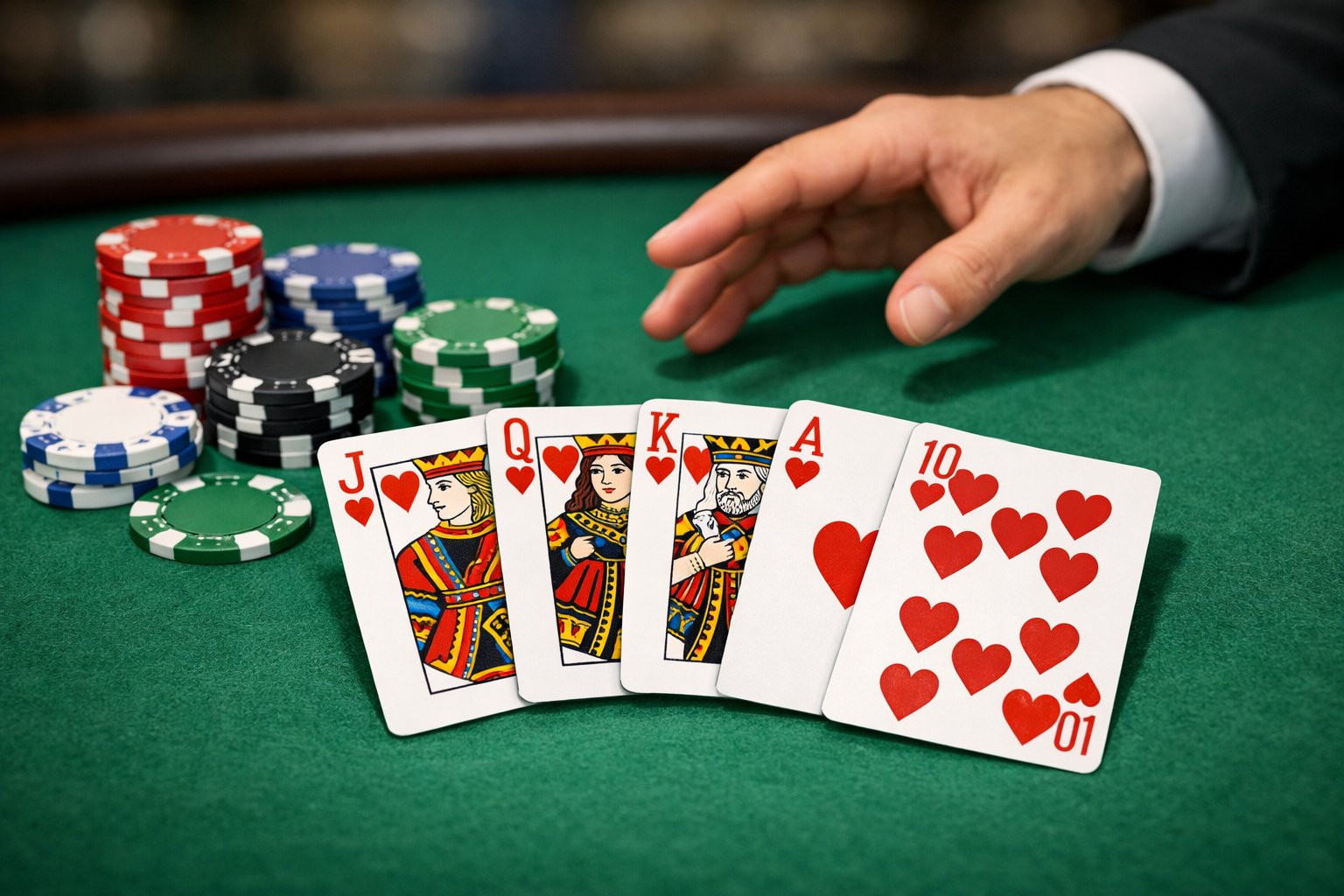
The game uses a standard 52-card deck and you play against the machine, not other players. That means no bluffing, no waiting for others, and no complicated betting rounds. Your success comes down to understanding which cards to hold and which to throw away.
This guide walks you through everything you need to start playing with confidence. You’ll learn the exact steps to play each hand, how payouts work, which strategies give you the best odds, and how to manage your money while playing online or in a casino.
What Is Jacks or Better?
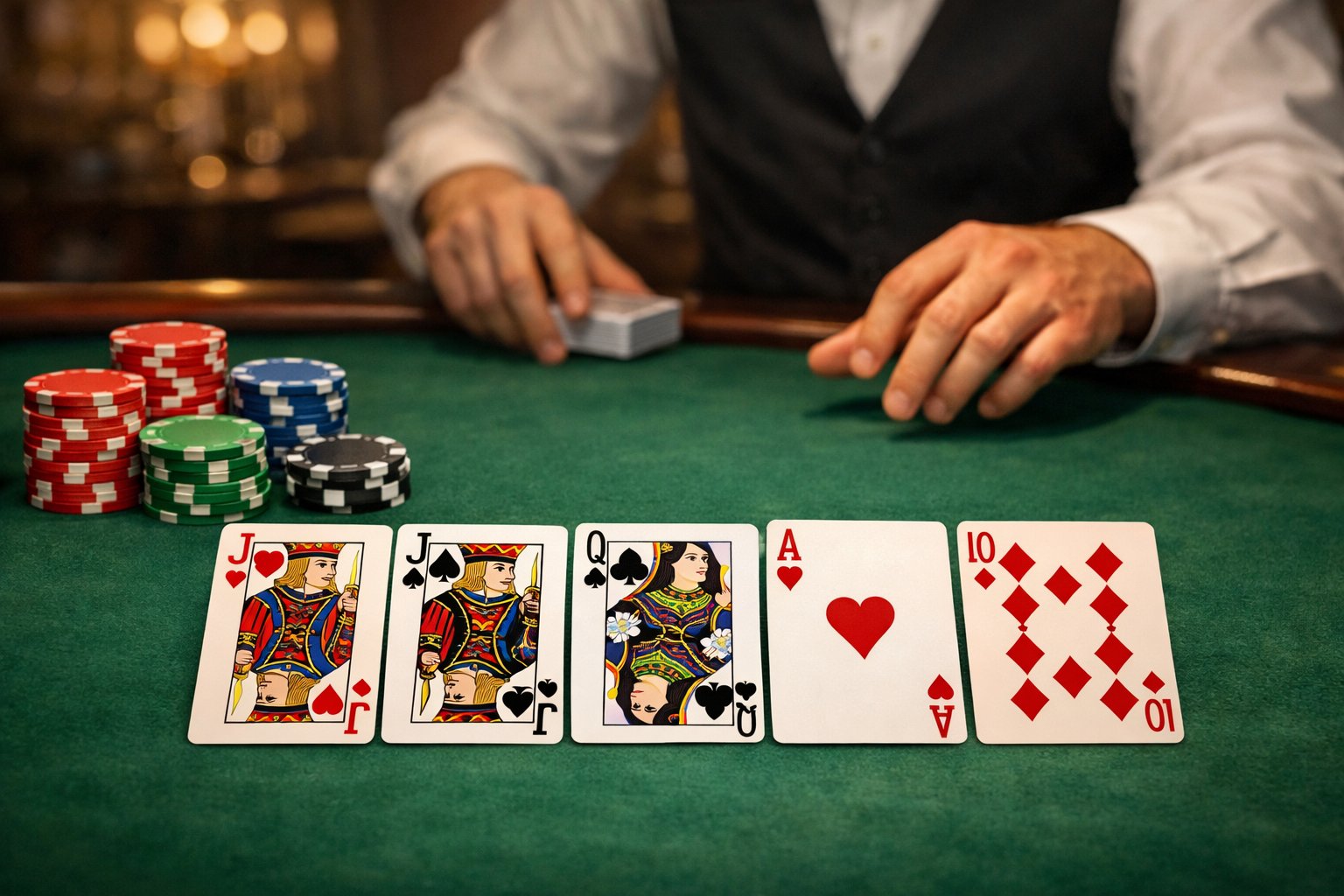
Jacks or Better is a video poker game where you need at least a pair of Jacks to win a payout. It’s the most popular video poker variant and serves as the foundation for most other video poker games you’ll find in casinos.
Origins and Popularity of Jacks or Better
Jacks or Better started as a traditional poker game played against other players, but it evolved into a video poker format in the 1970s. The video version quickly became popular because it combined poker strategy with the convenience of slot machines.
You can play Jacks or Better anytime without waiting for other players. The game spread to casinos worldwide and is now available both on physical machines and online platforms.
The game’s popularity comes from its simple rules and favorable odds. With proper strategy, Jacks or Better video poker offers one of the best returns in casinos, with some machines paying back up to 99.54% of bets over time. This makes it more favorable than most slot machines and many table games.
Key Differences from Other Video Poker Variants
Jacks or Better uses standard poker hand rankings with no wild cards. This sets it apart from games like Deuces Wild, where all twos act as wildcards that can substitute for any card.
In Jacks or Better, your minimum winning hand is a pair of Jacks. Other video poker variants have different requirements. Some games pay for any pair, while others need higher hands to win.
The game follows a five-card draw format where you receive five cards, choose which to keep, and draw replacements for the rest. Most video poker variants use this same format but change the payout structure or add special rules.
Overview of Jacks or Better Hands
You need to understand hand rankings to play Jacks or Better effectively. The winning hands from highest to lowest are:
- Royal Flush (A-K-Q-J-10 of the same suit)
- Straight Flush (five cards in sequence, same suit)
- Four of a Kind (four cards of the same rank)
- Full House (three of a kind plus a pair)
- Flush (five cards of the same suit)
- Straight (five cards in sequence)
- Three of a Kind (three cards of the same rank)
- Two Pair (two separate pairs)
- Jacks or Better (pair of Jacks, Queens, Kings, or Aces)
Any hand lower than a pair of Jacks loses. A pair of tens or lower doesn’t qualify for a payout, even though it’s a valid poker hand in other games.
How to Play Jacks or Better: Step-by-Step
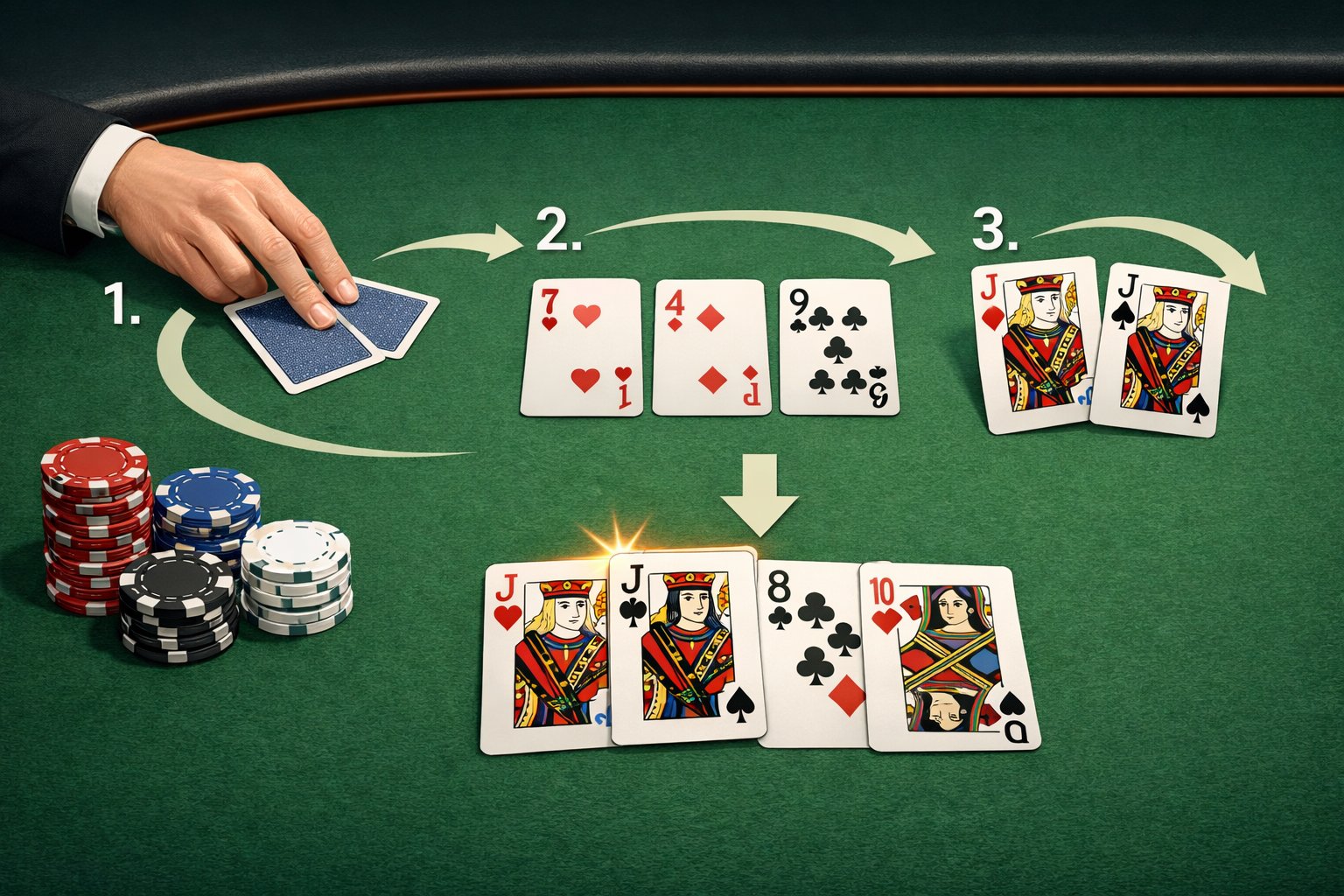
Playing Jacks or Better involves four main actions during each hand. You’ll place your bet, receive five cards, decide which ones to keep, and draw replacements to form your final hand.
Placing Bets and Coin Selection
You need to choose your bet size before each hand starts. Most Jacks or Better machines let you wager between one and five coins per hand.
The coin value matters. You can typically select denominations like $0.25, $0.50, or $1.00 per coin. If you bet five coins at $0.25 each, you’re wagering $1.25 total per hand.
Betting max coins changes the royal flush payout significantly. A royal flush pays 250 coins per coin bet for one through four coins, but jumps to 4,000 coins when you bet max coins. This means betting five coins gives you an 800-coin bonus on the top prize instead of just 1,250 coins (250 × 5).
You should bet max coins if your bankroll allows it. The difference in payout structure makes it mathematically advantageous for long-term play. If five coins stretches your budget too thin, consider playing at a lower coin denomination instead of reducing your coin count.
Dealing the Initial Hand
Press the “Deal” button to receive your five cards. The machine draws these cards randomly from a standard 52-card deck.
Your initial hand appears face-up on the screen. Take a moment to review what you have before making any decisions. Look for pairs of Jacks or higher, potential straights or flushes, and high cards that might help you win.
The game uses a fresh shuffle for every single hand. Previous results don’t affect your current deal in any way.
Choosing Cards to Hold or Discard
This decision determines your chances of winning. You’ll select which cards to keep and which to replace by tapping or clicking on them.
Cards you want to keep will show a “HOLD” indicator beneath them. You can hold anywhere from zero to all five cards. Hold any paying hand you already have, like a pair of Jacks, Queens, Kings, or Aces.
Keep four cards to a flush or straight when you’re one card away from completing them. Hold three cards to a royal flush if you don’t have a better option. Break up low pairs only when you have four cards to a royal flush.
Don’t hold single low cards (10 or below) unless they connect with other cards for a straight or flush possibility. High cards (Jack through Ace) are worth keeping even when unpaired.
Drawing New Cards and Final Hand Evaluation
Click the “Draw” button after selecting your holds. The machine replaces every discarded card with a new one from the same deck.
Your final five-card hand determines whether you win and how much. The machine automatically compares your hand to the paytable and awards credits for winning combinations.
Winning hands start at a pair of Jacks. Two Jacks, Queens, Kings, or Aces pays 1:1 on your bet. Stronger hands like two pair (2:1), three of a kind (3:1), and straights (4:1) pay progressively more. A royal flush delivers the maximum payout of 4,000 coins when you’ve bet max coins.
You can play another hand immediately by placing a new bet. Each hand is independent, so your strategy stays the same regardless of previous results.
Hand Rankings and Winning Combinations
In Jacks or Better, your payout depends entirely on the strength of your final five-card poker hand. Understanding which hands pay out and how much they’re worth helps you make better decisions about which cards to hold and discard.
Royal Flush and Its Payout
A royal flush is the strongest hand you can get in Jacks or Better. It consists of A♠ K♠ Q♠ J♠ 10♠ all in the same suit. This combination pays the highest reward in the game.
The royal flush payout varies dramatically based on your bet size. If you bet one coin, you typically receive 250 coins back. However, betting the maximum five coins jumps the payout to 4,000 coins. This massive difference makes betting max coins essential if you want to maximize your winnings.
Your odds of hitting a royal flush are roughly 1 in 40,000 hands. While rare, this hand is what every video poker player dreams of landing. The key is patience and proper strategy when you’re dealt four cards to a royal flush.
Straight Flush, Four of a Kind, and Full House
A straight flush contains five cards in sequence, all of the same suit, like 9♥ 8♥ 7♥ 6♥ 5♥. This hand pays 50 coins per coin bet and ranks just below a royal flush.
Four of a kind means you have four cards of the same rank, such as Q♦ Q♣ Q♠ Q♥ 3♠. This combination pays 25 coins per coin bet. It’s a strong hand that appears more frequently than straight flushes but still requires luck.
A full house combines three of a kind with a pair, like 8♣ 8♠ 8♦ 4♥ 4♠. On a full-pay 9/6 machine, a full house pays 9 coins per coin bet. The “9” in “9/6” specifically refers to this payout, making it an important number to check before you play.
Flush, Straight, and Three of a Kind
A flush contains five cards of the same suit that don’t form a sequence, such as K♠ J♠ 9♠ 5♠ 2♠. This hand pays 6 coins per coin bet on a 9/6 machine. The “6” in the paytable name refers to this specific payout.
A straight consists of five cards in sequence but not all the same suit, like 10♦ 9♣ 8♥ 7♠ 6♦. Straights pay 4 coins per coin bet. Both aces and fives can start or end straights, making A-2-3-4-5 and 10-J-Q-K-A valid combinations.
Three of a kind means three cards share the same rank, such as 7♦ 7♣ 7♠ K♥ 3♦. This hand pays 3 coins per coin bet. It’s one of the more common winning hands you’ll achieve during regular play.
Two Pair and Pair of Jacks or Better
Two pair combines two separate pairs in one hand, like K♠ K♦ 8♣ 8♥ 3♠. This combination pays 2 coins per coin bet. You should always hold both pairs and only draw one card to try for a full house.
A high pair means you have two cards of the same rank, specifically Jacks, Queens, Kings, or Aces. For example, J♥ J♣ 9♦ 4♠ 2♣ counts as a pair of jacks. This is the minimum winning hand in the game and pays 1 coin per coin bet, meaning you break even.
A low pair consists of tens or lower, such as 5♦ 5♠ K♣ 8♥ 2♦. While a low pair doesn’t pay out on its own, you should usually hold it because it gives you a solid chance to improve to three of a kind, four of a kind, or a full house. Breaking a low pair is only smart when you’re one card away from a royal flush or straight flush.
Jacks or Better Pay Tables and Payout Structures
The pay table determines how much you win for each poker hand, and different versions of Jacks or Better offer different payouts that directly affect your return to player percentage. The most important numbers to check are the full house and flush payouts, which vary between machines and casinos.
Understanding Pay Tables
The paytable in Jacks or Better shows exactly what each winning hand pays based on how many coins you bet. You’ll see nine different poker hands listed, starting with a pair of Jacks at the bottom and going up to a Royal Flush at the top.
Each pay table displays payouts for one through five coins. Most hands scale evenly as you add coins. For example, a straight pays 4 coins for one coin bet, 8 coins for two coins, and so on.
The Royal Flush is different. It pays 250, 500, 750, and 1000 coins for one through four coins. But betting five coins jumps the payout to 4000 coins instead of just 1250. This bonus for the maximum bet is why you should always play five coins per hand.
Classic 9/6 Jacks or Better Pay Table
The term “9/6 Jacks or Better” refers to a full house paying 9 coins and a flush paying 6 coins when you bet one coin. This is called full-pay 9/6 and offers the best RTP at 99.54% with optimal play.
| Poker Hand | 1 Coin | 2 Coins | 3 Coins | 4 Coins | 5 Coins |
|---|---|---|---|---|---|
| Royal Flush | 250 | 500 | 750 | 1000 | 4000 |
| Straight Flush | 50 | 100 | 150 | 200 | 250 |
| Four of a Kind | 25 | 50 | 75 | 100 | 125 |
| Full House | 9 | 18 | 27 | 36 | 45 |
| Flush | 6 | 12 | 18 | 24 | 30 |
| Straight | 4 | 8 | 12 | 16 | 20 |
| Three of a Kind | 3 | 6 | 9 | 12 | 15 |
| Two Pair | 2 | 4 | 6 | 8 | 10 |
| Jacks or Better | 1 | 2 | 3 | 4 | 5 |
This payout table represents the standard you should look for when choosing where to play.
Payouts by Hand Strength
Jacks or Better (a pair of Jacks, Queens, Kings, or Aces) returns your bet with a 1-to-1 payout. Two Pair pays 2-to-1, while Three of a Kind pays 3-to-1.
A Straight pays 4-to-1, and a Flush pays 6-to-1 on full-pay machines. The flush payout is one of the key numbers that changes between different pay tables. A Full House pays 9-to-1 on the best machines.
Four of a Kind jumps to 25-to-1, making it a significant win. A Straight Flush pays 50-to-1. The Royal Flush pays 250-to-1 for one coin, but betting five coins gives you 800-to-1 instead of 250-to-1.
Variations in Pay Tables and RTP
Many casinos offer 8/5 Jacks or Better instead of 9/6. This version pays 8 coins for a full house and 5 coins for a flush per coin bet. The RTP drops to 97.30% with perfect play, which means you lose money faster.
Some machines use 6/5 payout structures with an RTP of only 95.00%. These pay tables reduce the full house to 6 coins and keep the flush at 5 coins per coin bet.
You can spot the difference by checking the full house and flush lines on any Jacks or Better pay table. The other payouts typically stay the same across versions. Always choose 9/6 machines when available, as the 2.24% RTP difference between 9/6 and 8/5 adds up quickly over time.
Essential Jacks or Better Strategy
Playing Jacks or Better well means knowing which cards to keep and which to throw away based on math, not guesswork. The right decisions protect your bankroll and push your expected return close to the theoretical maximum when you follow optimal play guidelines consistently.
Key Strategy Rules for Beginners
Start by memorizing a few basic priorities that apply to most hands. Always keep any paying hand—a pair of Jacks or better—before chasing anything else. If you have four to a royal flush or four to a straight flush, those draws take priority over almost everything except a made royal or straight flush.
When you hold three to a royal flush, you’re giving up immediate payouts for a chance at the top prize. This trade makes sense mathematically because the potential return justifies the risk. Three to a royal beats most low pairs and single high cards in expected value.
High pairs (Jacks through Aces) should never be broken. They guarantee a payout and often improve to three of a kind or better. Two pairs also stay intact—the chance of hitting a full house doesn’t outweigh the guaranteed win you already have.
Use a jacks or better strategy chart when learning. It lists every possible hand combination in order of value, so you always know what to hold first.
When to Hold Paying Hands
Any hand that already qualifies for a payout deserves careful handling. A pair of Jacks or higher should be held in nearly every situation. Breaking this pair to chase a straight or flush almost always lowers your expected return.
Two pairs work the same way. Keep both pairs and draw one card instead of breaking them apart. The payout for two pairs is solid, and the chance of improving to a full house adds extra value without sacrificing what you already have.
Three of a kind and straights should always be held completely. These hands pay well and rarely improve enough to justify discarding any part of them. Four of a kind, straight flushes, and royal flushes are automatic holds—draw zero cards and collect your winnings.
The exception comes when you have four to a royal flush within a made flush or straight. In that case, discard the odd card and draw for the royal because the potential payout far exceeds the hand you’re giving up.
Drawing for Royal and Straight Flushes
Four to a royal flush ranks near the top of any strategy chart. Even if it means breaking a made flush or straight, the expected value of drawing one card to a royal justifies the decision every time.
Four to a straight flush works similarly but sits slightly lower in priority. It beats most other draws except four to a royal. When you hold four connected suited cards with only one gap or no gaps, the combined chances of hitting a straight flush, flush, or straight make this draw valuable.
Three to a royal should be held over low pairs and single high cards. It won’t hit often, but when it does, the payout makes up for the times you miss. This draw also beats most four to a flush situations and four to an outside straight.
Three to a straight flush (connected cards with no gaps or one gap) ranks below three to a royal but above many common holdings. Check your strategy chart to confirm placement, as penalty cards and exact suit patterns can shift priorities slightly.
Managing High Cards and Low Pairs
Low pairs (tens and below) pay nothing on their own but offer decent chances to improve into three of a kind or better. Hold low pairs when you don’t have anything stronger like high cards that could form a royal or four to a flush.
Two suited high cards (like a King and Queen of hearts) rank above one high card but below low pairs in most cases. They create multiple ways to win—hitting a high pair, flush draw, or straight draw. If the two high cards aren’t suited, their value drops slightly but they still beat holding just one high card.
One high card should be kept when nothing else qualifies. A single Jack, Queen, King, or Ace preserves your chance to pair up and get a payout. If you have no high cards, no pairs, and no draws worth keeping, you discard everything and draw five new cards.
Inside straights (four to a straight with a gap in the middle) rarely justify a draw. Outside straights (four connected cards that can complete on either end) have twice the outs and rank higher. Four to a flush beats both because nine cards complete the flush versus eight for an outside straight.
Always compare your current hand against a full strategy chart until these decisions become automatic. Small differences in hand strength add up quickly over hundreds of rounds.
Optimal Play, House Edge, and Bankroll Management
Understanding expected value and probabilities forms the foundation of smart play, while proper bankroll management protects you from natural swings that come with any casino game.
The Importance of Expected Value and Probabilities
Expected value tells you the average return you can expect from each decision. In full-pay Jacks or Better, the optimal strategy yields a 99.54% return, meaning you lose about $0.46 for every $100 wagered over time.
Each hand you’re dealt has specific probabilities attached to different outcomes. A four-card royal flush draw has an expected value of 18.36, while a high pair returns 1.54 on average. These numbers guide your decisions when multiple play options exist.
You should always choose the play with the highest expected value. When you hold four cards to a flush instead of a low pair, you’re making the mathematically correct choice because the flush draw returns 1.28 compared to the pair’s 0.82.
Learning these probabilities takes practice. The most common mistake players make is keeping low pairs over four-card flush draws, which costs them money in the long run.
Impact of House Edge and Variance
The house edge represents the casino’s mathematical advantage. Full-pay Jacks or Better has a 0.46% house edge with perfect strategy, making it one of the best bets in any casino.
Variance measures how much your results swing in the short term. Video poker has high variance, meaning you’ll experience significant ups and downs even when playing correctly. You might go dozens of hands without a winner, then hit a four of a kind.
The royal flush alone creates massive variance. This hand pays 800-to-1 but only appears roughly once every 40,000 hands. You need about one-third of your total return to come from royal flushes over the long term.
Understanding variance helps set realistic expectations. A losing session doesn’t mean you played wrong—it’s a natural part of the game.
Managing Your Bankroll for Consistent Play
Your bankroll should handle normal variance without going broke. A good rule is to have at least 250 times your bet size available for a single session.
Set clear loss limits before you start playing. If you’re betting $5 per hand, bring $1,250 and stop if you lose a predetermined amount like $300-$400.
Never chase losses by increasing your bet size. This strategy accelerates bankroll depletion during cold streaks. Stick to consistent bet amounts that match your total budget.
Track your play over multiple sessions. This helps you understand your actual results versus theoretical returns and keeps you disciplined.
Mistakes to Avoid in Jacks or Better
Breaking up paying hands incorrectly is expensive. Never break a made flush or straight to chase a royal flush unless you have four cards to the royal already.
Holding a single high card with a four-card inside straight costs you money. The inside straight with three or four high cards has higher expected value than the single high card alone.
Ignoring pay tables leads to playing games with worse returns. An 8/5 Jacks or Better game returns only 97.30% compared to 99.54% for full-pay 9/6 tables.
Playing too fast without thinking creates errors. Take your time to verify which cards to hold before drawing. Speed doesn’t matter when accuracy affects your return.
Tips for Playing Jacks or Better Online
Playing Jacks or Better at online casinos requires different considerations than physical machines. You need to find trustworthy platforms, understand which games offer the best payouts, and use available tools to improve your skills.
Choosing the Best Online Casinos
Not all online casinos treat video poker players equally. Look for licensed platforms with good reputations and clear payout records. Check user reviews and verify that the casino holds licenses from recognized authorities like the Malta Gaming Authority or UK Gambling Commission.
Test the casino’s customer support before depositing money. Send a question and see how quickly and helpfully they respond. Poor support often signals other problems with the platform.
Payment options matter too. The best online casinos offer multiple deposit and withdrawal methods with reasonable processing times. Avoid sites that make it difficult to cash out your winnings or charge excessive fees.
Look for casinos that offer bonuses specifically for video poker. Some bonuses exclude table games or video poker entirely, so read the terms carefully before accepting any promotion.
Identifying Full-Pay Machines and RTP
Online video poker games display their paytables clearly on screen. A full-pay 9/6 Jacks or Better machine pays 9 coins for a full house and 6 for a flush per coin bet. This offers an RTP around 99.54% with perfect play.
Many online casinos offer lower paytables like 8/5 or 7/5 versions. An 8/5 machine drops your RTP to about 97.3%, while 7/5 machines fall to roughly 96.1%. Even small differences in paytables significantly affect your long-term results.
Check the paytable before playing any hand. The information is always visible, usually above or beside the cards. If the casino doesn’t clearly display RTP or paytable information, consider playing elsewhere.
Practice and Using Strategy Tools
Most online casinos let you practice Jacks or Better in demo mode without risking real money. Use this feature to learn proper hold decisions and get comfortable with the interface. Practice helps you recognize patterns and avoid costly mistakes when you switch to real money play.
Online strategy charts are available for free and show the mathematically correct play for every possible hand. Keep one open while you practice Jacks or Better until the decisions become automatic. Many experienced players still reference charts during actual play since even small mistakes add up over time.
Some websites offer video poker trainers that highlight errors in real-time. These tools tell you immediately when you make a wrong hold decision and explain the correct play. Using a trainer for a few hours can dramatically improve your understanding of optimal strategy.
Frequently Asked Questions
Players often have specific questions about hand decisions, strategy tools, and paytable variations that directly impact their success at Jacks or Better video poker.
What are the basic rules for playing Jacks or Better video poker?
You start by placing a bet of one to five coins. After you click deal, you receive five cards from a standard 52-card deck.
You then select which cards to keep by clicking on them. When you click draw, the machine discards your unheld cards and deals replacements.
Your final five-card hand determines your payout. You need at least a pair of jacks to win anything. Higher-ranking hands like flushes, full houses, and royal flushes pay more.
The game uses standard poker hand rankings. A royal flush pays the most, while a pair of jacks, queens, kings, or aces pays the minimum amount.
What is a Jacks or Better strategy chart and how can it improve my game?
A strategy chart lists all possible hand combinations in order of their expected value. You compare your dealt hand to the chart and keep the highest-ranking combination shown.
The chart tells you the mathematically correct decision for every situation. This eliminates guessing and reduces the house edge to its minimum.
Using a strategy chart can improve your return to player percentage significantly. On a 9/6 machine with optimal play, you can achieve an RTP of 99.54%.
You should keep the chart handy when you play until you memorize the most common decisions. Most charts organize hands from best to worst, so you stop at the first match you find.
Can you explain the importance of a low pair in Jacks or Better?
A low pair consists of twos through tens. These pairs do not qualify for the minimum payout in Jacks or Better.
You should usually break a low pair if you have four cards to a flush or four cards to an open-ended straight. These drawing hands have higher expected values than keeping the low pair.
However, you keep a low pair over three cards to a straight flush in most cases. You also keep it over single high cards or two unsuited high cards.
Low pairs rank fairly high in the strategy hierarchy. They give you a chance to improve to three of a kind, a full house, or four of a kind on the draw.
What are some common mistakes to avoid when playing Jacks or Better?
Never bet fewer than five coins per hand. The royal flush pays 800 to 1 with a five-coin bet but only 250 to 1 with fewer coins.
Don’t hold a kicker with a pair. If you have a pair of jacks and an ace, you should only keep the two jacks and draw three new cards.
Avoid breaking a winning hand to chase a straight or flush unless your cards give you a straight flush draw. A guaranteed payout is better than a slim chance at a bigger hand.
Don’t hold three cards to a royal flush if you already have a made flush or straight. The odds of hitting the royal are too low to justify breaking a paying hand.
Where can I find a reliable source to play Jacks or Better online for free?
Many licensed online casinos offer free play modes where you can practice without risking money. You access these games through your web browser without downloading software.
Look for casinos that display licensing information from recognized gambling authorities. These sites use certified random number generators to ensure fair play.
Some casino review sites provide free versions of Jacks or Better for practice. These games simulate real casino conditions and let you test strategies.
You should verify that any site you use has proper security measures in place. Check for SSL encryption and read user reviews before creating an account.
How does the paytable affect my strategy in Jacks or Better?
The paytable determines how much each winning hand pays. Full pay 9/6 machines pay nine coins for a full house and six coins for a flush per coin wagered.
Lower paytables like 8/5 or 7/5 reduce the return to player percentage significantly. An 8/5 machine has an RTP of only 97.30% compared to 99.54% for 9/6.
Your strategy changes slightly based on the paytable. On lower-paying machines, you might hold certain hands differently because the expected values shift.
You should always check the paytable before playing. The full house and flush payouts appear prominently on the screen and tell you the machine’s quality.
